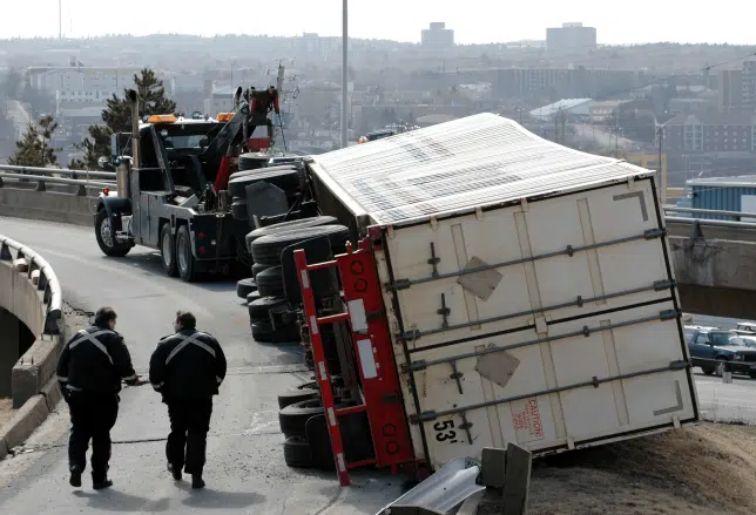
Truck accident claims involve more parties and evidence than car accidents. Learn the key differences under Ohio law and how to protect your claim.
By Jami S. Oliver
Truck accident claims in Ohio typically involve more than two drivers sharing fault. They often require proof of:
- Multiple potential responsible parties.
- Federal FMCSA-based safety duties.
- Electronic records (logs and data) that can be altered or lost without prompt action.
- More extensive medical and economic damages due to the severity of crashes.
This combination affects both liability strategy and what evidence your attorney must act on early.
Liability is more complex in truck cases than car cases
In most car crash cases, fault usually centers on driver behavior. In commercial truck crashes, fault can involve additional parties and overlapping responsibilities.
Common reasons truck cases involve more than one defendant
- Multiple responsible parties (driver + carrier + others).
- Contracted work and maintenance relationships that may contribute to unsafe conditions.
- Dispatch/logistics decisions that may affect how and when the truck was operated.
- Federal trucking safety rules that can support negligence theories.
Quick comparison: truck vs car liability
| Issue | Car accident claim | Ohio truck accident claim |
| Who may be liable? | Typically the drivers (sometimes owners/insurers depending on facts) | Often the driver, trucking company (carrier), and other entities tied to maintenance, cargo, or operations |
| Safety standards | State traffic laws and common negligence | State law + FMCSA-based safety duties that shape the standard of care |
| Evidence needed to prove fault | Police report, witness statements, photos | More records across operations (logs, maintenance, dispatch, telematics, etc.) |
Learn more about liability parties
For a detailed breakdown of potential liable parties and theories (including carrier negligent hiring/supervision and maintenance/cargo issues), see: Who Can Be Held Liable for a Commercial Truck Accident in Ohio? – Oliver Law Office
FMCSA rules matter more in truck claims than car claims
Commercial drivers and carriers operate under federal trucking safety regulations enforced through FMCSA.
A violation doesn’t automatically mean someone is liable, but it can help show that a safety duty was breached. In Ohio truck crash cases, the most relevant federal obligations often relate to:
- Hours-of-service compliance and recordkeeping.
- Driver qualification documentation.
- Controlled substance and alcohol testing compliance.
- Vehicle inspection and maintenance obligations.
- Cargo securement standards.
- Accident reporting requirements.
These rules become important because they can connect what the trucking company required of their driver to the crash facts often through electronic records.
Electronic evidence is more common (and time-sensitive) in truck crashes
Truck accidents frequently involve electronic systems that are not present in most car crashes. This includes data tied to regulations and vehicle operation.
Examples of electronic evidence commonly unique to truck cases
- ELD/log data (hours-of-service records).
- ECM/black box event data (vehicle speed, braking, impact-related events).
- GPS/telematics information (route history, speed/acceleration patterns).
- Dash camera footage (if equipped).
- Maintenance and inspection records.
- Dispatch and communications records.
Why is timing critical?
Some data can be overwritten, retained on strict schedules, or become harder to retrieve as vehicles and systems move through normal business processes. The earlier counsel acts, the better the chance evidence can be preserved and reviewed.
Learn more about electronic evidence
For a deeper look at the types of truck evidence that are most important and how preservation works see: Important Evidence in Truck Accident Cases
Damages are often larger and harder to prove in truck injury cases
Truck crashes can cause more severe and long-lasting injuries than typical car crashes. That affects both the amount of compensation and the amount of proof needed.
Common truck accident damages categories
- Medical expenses (including future treatment).
- Rehabilitation and therapy.
- Lost wages and loss of earning capacity.
- Prescription and ongoing care costs.
- Pain and suffering and other non-economic damages.
- Property damage.
- Wrongful death damages (if applicable).
Common injuries and typical damage categories
| Injury type | Typical impact on the injured person | Damage categories that often apply |
| Traumatic brain injury (TBI) | Memory/attention problems, headaches, cognitive impairment | Medical treatment, future care, lost earning capacity, pain & suffering |
| Spinal cord or nerve injury | Partial or permanent mobility loss, chronic pain | Medical care, rehab, assistive devices, long-term disability-related expenses |
| Broken bones / fractures | Surgery, long recovery, possible permanent limitation | Current and future medical bills, lost wages, reduced function |
| Internal injuries | Prolonged treatment; risk of lasting impairment | Hospital costs, follow-up treatment, future monitoring |
| Burns | Scarring, grafts, long-term therapy | Medical expenses, cosmetic/reconstructive care, pain & suffering |
| Severe soft-tissue injuries | Chronic pain, restricted movement, therapy needs | Physical therapy, medication, future treatment, pain & suffering |
| Wrongful death (when applicable) | Loss of a loved one and family support | Wrongful death damages, loss of companionship/support, funeral and related costs |
How damages get proven matters. Courts often require consistent medical documentation, work history support, and—when appropriate—expert input on future care and economic loss.
Deadlines and early action can decide the outcome
Ohio personal injury and wrongful death claims have statutes of limitations. Delays can also reduce your ability to investigate electronically stored information and build a full record of the crash.
If you or a loved one was hurt in a truck accident, you should speak with counsel early so evidence preservation and investigation can begin promptly.
What to do after an Ohio truck accident (priority steps)
If you are physically able and it is safe to do so:
- Get medical care immediately.
- Report the crash and ensure details are accurate.
- Collect witness information and contact details.
- Take photos/video of vehicles, roadway conditions, signage, and debris.
- Preserve insurance and incident paperwork.
- Avoid signing releases or giving recorded statements without legal review.
For a more targeted checklist, see: What Evidence Should be Preserved After a Truck Accident?
FAQ: How truck accident claims differ from car accident claims in Ohio
1) Who can be liable in an Ohio truck accident claim?
Liability may involve the truck driver, the trucking company (carrier), the truck/trailer owner, maintenance/repair providers, cargo/loading contractors, and sometimes manufacturers in limited product-defect cases.
See also: Who Can Be Held Liable in a Commercial Truck Accident?
2) Can a trucking company be liable even if the driver caused the crash?
Yes. Trucking companies can face liability for negligent hiring, negligent supervision/retention, safety policy failures, dispatch or logistics errors, and other conduct connected to safe operation.
3) How do FMCSA rules affect my Ohio truck accident claim?
FMCSA regulations help establish safety standards of care. Evidence of violations related to hours-of-service, maintenance, inspections, drug/alcohol testing, and cargo securement can support negligence arguments.
4) What electronic evidence is most important in truck accident cases?
Commonly important evidence includes ELD logs, ECM/black box data, GPS/telematics, dash camera footage, maintenance and inspection records, and dispatch communications.
5) How do I protect evidence after a truck crash in Ohio?
Preserve photos/videos and medical records. Keep copies of incident-related documents. Write down witness details. Avoid signing releases or giving recorded statements before an attorney reviews.
6) What if the defense says I was partly at fault?
Ohio uses Modified Comparative Negligence. If you are more than 50% at fault, recovery may be barred. If you are 50% or less, damages may be reduced based on your share of fault.
7) What types of injuries lead to higher-value truck accident claims?
Serious injuries like traumatic brain injury, spinal cord/nerve damage, fractures, internal injuries, and burns often require extensive medical care and long-term damages proof, including future treatment and economic loss.
8) How long do I have to file an Ohio truck accident claim?
Deadlines depend on whether the case is a personal injury or wrongful death claim. Because timing can also affect evidence preservation, contact an attorney as soon as possible.
If you were injured in a commercial truck accident, early investigation and evidence preservation are critical—especially for ELD logs, black box data, and other time-sensitive records.
Disclaimer: The information provided in this blog post is for general informational purposes only and does not constitute legal advice. Reading this content does not create an attorney–client relationship between you and Oliver Law Office or its attorneys. Laws and regulations vary by jurisdiction, and you should consult a qualified attorney in your area for advice regarding your specific situation.
Jami S. Oliver, CEO & Founder of Oliver Law Office in Dublin, Ohio has been practicing injury law in Ohio since 1993 and has been recognized by her peers as a leading professional in the field of personal injury law. Her firm also handles cases related to trucking crashes, wrongful death, complex employment litigation, drug recalls, injuries from defective products and other serious injury matters. For a free personal injury or wrongful death case evaluation click here.