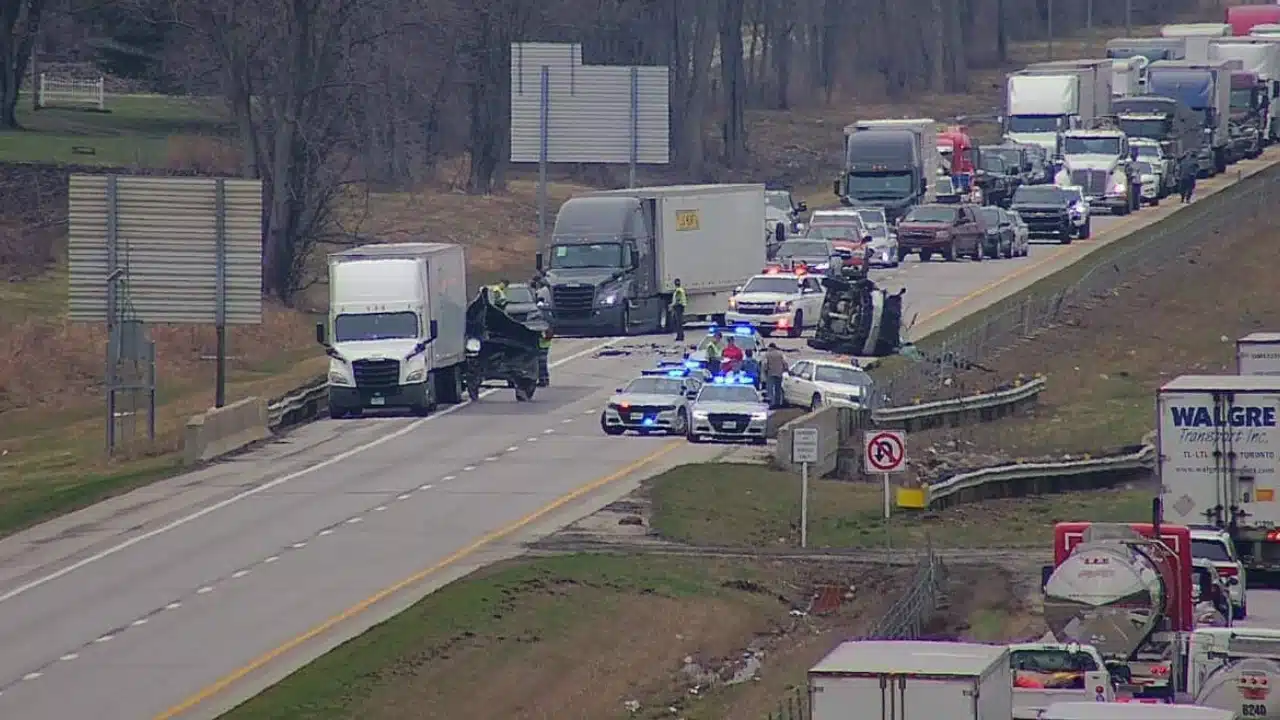
Injured in an Ohio semi-truck accident? Follow this step-by-step checklist to preserve evidence, protect your rights, and strengthen your claim.
By Jami S. Oliver
A collision with a semi-truck can change your life in an instant. Because commercial trucks are significantly larger and heavier than passenger vehicles, these accidents often result in catastrophic injuries, extensive property damage, and complicated legal claims. If you’ve been involved in a truck accident in Ohio, one of the most important things you can do is act quickly — and know what steps to take.
The actions you take in the first hours and days after a truck accident can determine whether critical evidence is preserved or lost forever. Electronic logging device data, black box records, dash camera footage, and third-party surveillance video can all disappear within days if no one acts to secure them.
Unlike a typical car accident, a trucking case often involves multiple parties — including the truck driver, the trucking company, maintenance contractors, cargo loaders, and insurance carriers. Trucking companies and their insurers often begin investigating immediately after a crash. Their representatives may arrive at the scene within hours to document evidence that supports their position.
Accident victims deserve the same level of preparation.
As an Ohio personal injury attorney, I’ve seen firsthand how the right evidence, gathered quickly, can make the difference between a denied claim and a successful recovery. This checklist is designed to help you understand what to do, and when.
Step One: Prioritize Your Safety and Call for Help
Before anything else, make sure you and anyone else involved in the accident are safe. Call 911 immediately. Always get law enforcement to the scene when injuries are involved. A responding officer will document the crash, gather initial witness information, issue any citations, and prepare a report that often becomes an important piece of evidence in your case.
Do not give a recorded statement to the trucking company or its insurance carrier before speaking with an attorney.
Step Two: Document the Scene
If your injuries allow, gathering evidence at the scene can be invaluable. Take photographs before vehicles are moved whenever possible.
Important things to photograph include:
- All vehicles involved and the damage to each.
- Skid marks and road debris.
- Road conditions, traffic signals, and signage.
- Weather and lighting conditions.
- Your visible injuries.
- Any cargo spills or shifting loads.
Take photos from multiple angles. Wide shots provide context, while close-up images capture important details. Take video of the scene as well.
Step Three: Collect Witness Information Yourself
Independent witnesses can provide objective accounts of what happened. Do not rely on the police report to collect this information for you. Officers do not always record every witness, and their notes may be incomplete.
Whenever possible, obtain the following from anyone who saw the crash:
- Full name.
- Phone number.
- Email address.
- A brief description of what they observed.
Witness memories fade quickly. Prompt documentation is especially valuable.
Step Four: Contact an Attorney Before Evidence Disappears
This is the most time-sensitive step on this list.
One of the first things an experienced truck accident attorney will do is send a spoliation letter – also called a preservation letter – to the trucking company and other potentially responsible parties. This formal notice demands that key evidence be preserved, including electronic data, driver records, maintenance logs, dash camera footage, and inspection reports.
If a company destroys or fails to preserve evidence after receiving that notice, it may face legal consequences that can strengthen your case.
Acting quickly matters because some of the most important evidence in a truck accident case can vanish within days:
- Electronic logging device data is not retained indefinitely by carriers.
- Black box data often requires prompt download by an expert.
- Dash camera systems frequently overwrite recordings automatically after a short period.
- Surveillance footage from nearby businesses and traffic cameras is often deleted within 24 to 72 hours.
An attorney can also work with accident reconstruction experts, obtain electronic data from the truck, interview witnesses, and secure surveillance footage before it is erased.
Step Five: Get a Copy of the Police Report
Always obtain a copy of the official police report from your accident. The responding officer’s report may include initial observations, driver statements, witness information, citations issued, a diagram of the collision, and a preliminary assessment of fault.
Although a police report is not the final word on liability, it often becomes an important foundation for your case.
Step Six: Seek Medical Treatment and Follow Your Doctor’s Recommendations
Seek medical treatment as soon as possible, even if you feel relatively okay. Some injuries – including traumatic brain injuries and internal damage – may not present symptoms right away.
Follow your doctor’s treatment plan without gaps. This includes any follow-up specialists like physical therapy. Insurance companies frequently use gaps in treatment to argue that your injuries were less serious than claimed. Keep copies of all medical records related to the accident, including:
- Emergency room and ambulance reports.
- Hospital and surgical records.
- Imaging studies, including X-rays, CT scans, and MRIs
- Physical therapy records
- Prescription receipts
Step Seven: Preserve Your Own Physical Evidence
Many accident victims unintentionally discard evidence that could support their claim. When it comes to a personal injury case, it is always better to keep more than you think you need.
Consider preserving:
- Damaged clothing — do not wash it.
- Broken personal property.
- Your damaged vehicle, if possible — do not authorize repairs until your attorney advises you to.
- Any medical devices, such as braces, slings, or crutches
- Photographs documenting your recovery over time
A written journal describing your pain levels, physical limitations, and the ways the accident has affected your daily life can also provide compelling evidence of non-economic damages.
Step Eight: Document Your Financial Losses
You may be entitled to recover both economic and non-economic damages. Keeping organized records makes it easier to calculate the full value of your claim.
Helpful documentation includes:
- All medical bills and out-of-pocket expense receipts.
- Pay stubs and tax returns to document lost income.
- Employer wage verification if you missed work.
- Repair estimates or vehicle replacement costs
What Evidence Your Attorney Will Pursue on Your Behalf
You do not need to gather all this evidence yourself. An experienced truck accident attorney will know what to request and how to obtain it. The following types of evidence are commonly sought in serious truck accident cases.
Electronic Logging Device Data. Federal law requires most commercial trucks to use Electronic Logging Devices, as mandated by the Federal Motor Carrier Safety Administration. These devices record driving hours, rest breaks, duty status, and hours-of-service compliance. If a driver exceeded federally permitted driving limits, ELD records may reveal fatigue or regulatory violations that contributed to the collision.
The Truck’s Black Box. Most commercial trucks contain an Event Data Recorder, commonly called a black box. The National Highway Traffic Safety Administration sets the federal standards governing what these devices capture. A black box may record vehicle speed, brake application, steering inputs, engine performance, cruise control usage, sudden deceleration, and timing before impact. This electronic evidence often becomes one of the strongest forms of proof in serious truck accident litigation.
Dash Camera Footage. Many commercial trucks now use forward-facing and driver-facing cameras. Video footage may capture traffic conditions, driver behavior, lane changes, speed, following distance, and driver distraction. Because many systems automatically overwrite recordings after a short period, prompt action is essential.
Driver Qualification Files. Trucking companies are required by federal regulation to maintain a driver qualification file for each driver they employ. These files may contain commercial driver’s license information, employment history, medical certifications, drug and alcohol testing records, training documentation, and prior safety violations. These records may reveal negligent hiring, negligent retention, or inadequate supervision.
Maintenance and Inspection Records. Commercial trucks require regular inspections and maintenance. Records of brake inspections, tire replacements, repair invoices, annual inspections, and safety defect reports can help establish whether poor maintenance contributed to the crash.
Cell Phone Records. Distracted driving remains a significant cause of truck accidents. Phone records may show calls, text messages, data usage, and app activity at the time of the collision.
Cargo Records. Improperly loaded cargo can contribute to rollovers, jackknife accidents, and lost-load crashes. Bills of lading, cargo manifests, weight tickets, and shipping records can help identify whether a cargo loading company or another third party contributed to the crash.
Surveillance Video. Nearby businesses, traffic cameras, and residential security systems may have recorded the accident. Potential sources include gas stations, retail stores, warehouses, restaurants, highway cameras, and home security systems. Many of these systems delete footage automatically within days.
Evidence Quick-Reference Table
| Evidence Type | Why It Matters | Preservation Urgency |
| ELD data | Reveals driver fatigue or hours-of-service violations | High — not retained indefinitely |
| Black box / EDR data | Speed, braking, steering, pre-impact timing | High — requires prompt expert download |
| Dash camera footage | Driver behavior, distraction, lane changes | High — often auto-overwritten within days |
| Third-party surveillance video | Independent view of the crash | High — often deleted within 24–72 hours |
| Driver qualification file | Negligent hiring, retention, or training | Medium — held by the company |
| Maintenance and inspection records | Mechanical failure or neglected repairs | Medium — held by the company |
| Cargo records | Improper loading or third-party fault | Medium — held by shipper or loader |
| Police report | Official documentation and fault assessment | Lower — retained by law enforcement |
| Medical records | Links injuries directly to the crash | Lower risk of loss, but gaps can hurt your claim |
For more information about what evidence is important in a truck accident case, see: Important Evidence in Truck Accident Cases
Frequently Asked Questions
How quickly should I act after a semi-truck accident?
As soon as possible. Electronic records like ELD data, black box downloads, and dash camera footage are often overwritten or deleted within days, not weeks. The sooner a preservation letter goes out, the better.
What is a spoliation or preservation letter?
It is a formal notice, typically sent by an attorney, demanding that a trucking company and other involved parties preserve specific evidence that might otherwise be routinely deleted or destroyed. If a company fails to preserve evidence after receiving that notice, the court may consider that failure when evaluating the case.
Can I request the trucking company’s black box data myself?
You can try, but trucking companies and their insurers are not obligated to voluntarily hand over evidence to an unrepresented accident victim, and delays can result in the data being lost. An attorney can send a legally binding preservation request and, if necessary, pursue formal discovery to obtain it.
What if important evidence has already been deleted?
If a company deletes evidence after receiving a preservation letter or after litigation should reasonably have been anticipated, that failure to preserve evidence may itself become an issue the court can consider, potentially working in your favor.
Do I need a lawyer right away, or can I wait?
Because so much of the strongest evidence in a truck accident case can disappear within days, speaking with an attorney as early as possible, even before your treatment is complete, gives you the best chance of preserving what you will need to support your claim.
Don’t Wait to Protect Your Rights
Time is one of the biggest factors in any truck accident case. Electronic data may be overwritten, surveillance footage erased, witnesses become harder to locate, and physical evidence can disappear.
The steps taken in the days and weeks following a serious truck accident can have a lasting impact on the outcome of your claim. Acting promptly gives you the best opportunity to build a strong case and hold the responsible parties accountable.
If you or a loved one has been injured in a semi-truck accident in Ohio, consulting an experienced personal injury attorney as soon as possible can help preserve vital evidence and protect your ability to pursue the compensation you deserve.
Disclaimer: The information provided in this blog post is for general informational purposes only and does not constitute legal advice. Reading this content does not create an attorney–client relationship between you and Oliver Law Office or its attorneys. Laws and regulations vary by jurisdiction, and you should consult a qualified attorney in your area for advice regarding your specific situation.
Jami S. Oliver, CEO & Founder of Oliver Law Office in Dublin, Ohio, has been practicing wrongful death and injury trial law in Ohio since 1993 and has been recognized by her peers as a leading professional in the field. Her firm also handles cases related to trucking crashes, wrongful death, nursing home neglect and abuse, drug recalls, injuries from defective products, and complex employment litigation. For a free wrongful death or personal injury evaluation, click here.